
Lone Echo 2: Habitat A
Level Design | Puzzle Design

Level Overview
Habitat A is an introductory narrative and traversal level in Lone Echo II, a VR title developed by Ready At Dawn for Oculus. Set 400 years after the first game, it follows Captain Olivia “Liv” Rhodes and the android Echo One “Jack” as they awaken in a derelict orbital habitat. Players navigate the domicile pods and common areas toward the tram platform, learning the traversal, interaction, and co-op systems that shape the rest of the experience.
As Level Designer and Pod Leader, I oversaw the level from concept to final implementation, collaborating with environment art, narrative, lighting, and systems teams to unify gameplay, story, and atmosphere. My focus was on clear teaching moments, pacing, and co-op interactions that grounded players emotionally while establishing the game’s tone.
Key Contributions
-
Level Ownership: Led the design of Habitat A from initial concept and paper layout through blockout and final in-game implementation.
-
Cross-Discipline Collaboration: Coordinated with environment art, narrative, lighting, and systems design teams to ensure visual and gameplay cohesion.
-
Gameplay Integration: Designed early puzzles and traversal sequences that introduced and reinforced the game’s core co-op and locomotion mechanics.
-
Iteration & Polish: Conducted playtests and incorporated feedback to refine player flow, readability, and emotional pacing throughout the level.
Level Layout

Level Walkthrough

Area 1: Pods & Commons
This section establishes core co-op mechanics, environmental storytelling, and spatial problem-solving through two interconnected areas that blend narrative progression with hands-on gameplay.
1A - Workshop & Pods
-
Jack awakens and reconnects with Liv, who informs him they are on a seemingly abandoned habitat. Together, they explore the domicile pods and common area.
1B - Commons
-
Liv explains what she has learned about their situation, revealing details about time displacement, where they are, and how they arrived there.
-
Interaction: Jack is directed to a salvage chute where a drone deposits recovered materials, including a component needed to repair the holo-table.
-
Interaction: Jack helps Liv repair the holo-table using the component, revealing a map of Chiron Station and a nearby transit platform, establishing Liv’s next goal.
-
Tool: A power outage introduces urgency as Liv’s life support begins to fail. She enables Jack’s cutter, allowing him to slice through panels and bypass a sealed door so they can escape to the security corridor.


Environment Art: Ash Thundercliffe
Lighting: Dushyant Agarwal

Area 2: Security
This sequence builds on the urgency from the Commons, shifting from cooperative exploration to isolation and problem-solving under pressure. As Jack and Liv pass through security, an automated lockdown identifies Liv as contaminated and seals the way forward. The design emphasizes tension, separation, and emotional stakes through lighting, spatial contrast, and limited communication between the two characters.
2A - Scanner
-
The pair trigger an automated quarantine protocol as they pass through the scanner. Liv spots the security room through a nearby window and directs Jack there to lift the lockdown.
2B - Quarantine
-
Interaction: A side door opens to a spooky medical chamber with manual controls to a vent. Liv holds the door for Jack, prompting their brief separation as he proceeds alone.
2C - Vents
-
Tool: Jack activates his headlamp to navigate the dark vents toward the security room, using his cutter to access maintenance panels and bypass sealed sections.
2D - Security Office
-
Interaction: Jack discovers that Liv is infected with bio-mass, explaining the lockdown. He reactivates a security drone and uses its access code to lift the quarantine, reuniting them before they reach the tram platform.


Environment Art: Ash Thundercliffe
Lighting: Dushyant Agarwal
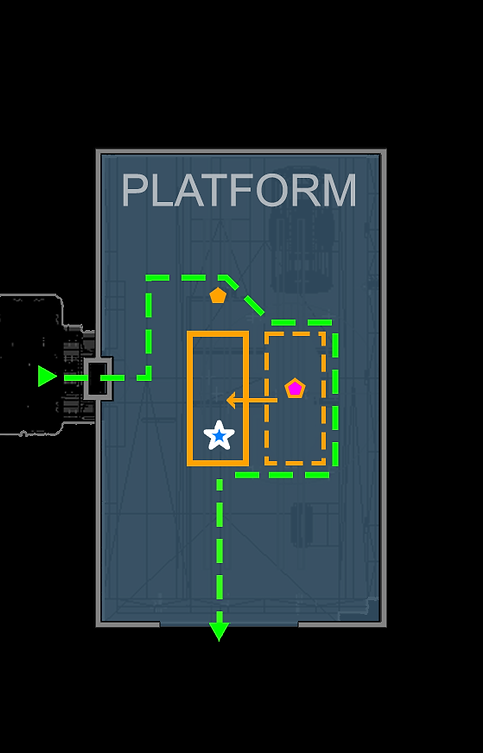
Area 3: Tram Platform
This final sequence serves as both the mechanical and emotional payoff for Habitat A. The space opens into a large maintenance bay where the tram to Chiron Station sits dormant, framed by the station beyond to create a clear sense of destination and closure. The design focuses on visual clarity, co-op rhythm, and multi-stage problem solving that reinforces the bond between Jack and Liv after their separation.
3A - Platform
-
Interaction: Players explore the platform and discover that the tram’s control console has been deliberately damaged. Jack uses his cutter to access the panel and manually shift the rail car from the service track to the main line.
-
Interaction: Jack restores the tram by calibrating four stasis connectors under Liv’s guidance as she reads instructions from a service manual. The puzzle unfolds in phases, beginning with player-led problem solving and ending in synchronized co-op actions. Once the tram powers up, the airlock opens and the two depart the habitat for Chiron Station...


Environment Art: David Lieu
Lighting: Dushyant Agarwal
Pacing & Tension

Pre-Production
Pre-production began with one-page briefs outlining gameplay intent, player learning objectives, and narrative flow for each section of Habitat A. I collaborated with art and visual development to define the level’s tone and atmosphere, then worked with narrative and design teams to map pacing, tension, and story integration. The process moved through iterative blockouts, evolving from early spatial tests to refined greybox and whitebox passes to ensure cohesive alignment across gameplay, art, and narrative.
01: One-Page Brief
I began pre-production by drafting one-page briefs with the directors and story team for each of the three sections of Habitat A. These outlined gameplay pillars, narrative beats, and player learning goals, establishing a shared foundation for pacing and story delivery. Each section was assigned a bronze, silver, or gold tier to define production scope and priority.
The briefs served as concise alignment tools for the cross-discipline pod, focusing on gameplay clarity and narrative cohesion over technical detail. With the core gameplay pillars established, the narrative served as connective tissue, reinforcing the player’s objectives and grounding each section within the broader story arc.


02: Art & Vis-Dev Collab
I worked with environment artists and the visual development team to set the look and feel of Habitat A. The level combines the interior of an abandoned space habitat with realistic, everyday details, creating a tense and immersive atmosphere as players explore.


Concept Art: Cody Foreman
Habitat A followed a structured blockout process designed to support its narrative and gameplay goals:
-
Blockout: Established the core layout, defining spatial relationships, start and end points, and key story and gameplay moments to set the foundation for player flow.
-
Greybox: Added refined geometry using modular blockout kits, along with placeholder gameplay and narrative elements to validate pacing, traversal, and tension.
-
Whitebox: Integrated gameplay systems, co-op interactions, and environmental storytelling to create a fully playable version ready for internal testing and iteration.
To support this process, I collaborated closely with environment and visual development teams to create modular blockout kits that maintained visual consistency and streamlined iteration across disciplines.


full map: paper design → greybox